CrowdStrike’s $43.9 Billion Zscaler Agreement Makes Endpoint and Network Security One Platform Decision
CrowdStrike agreed to acquire Zscaler in an all-stock transaction, bringing endpoint protection, network security and zero-trust access toward one platform architecture—and making resilience, interoperability and exit rights central to security consolidation.
Take the argument with you.
Read the publication-ready report. Generated from the canonical News article.
What changed
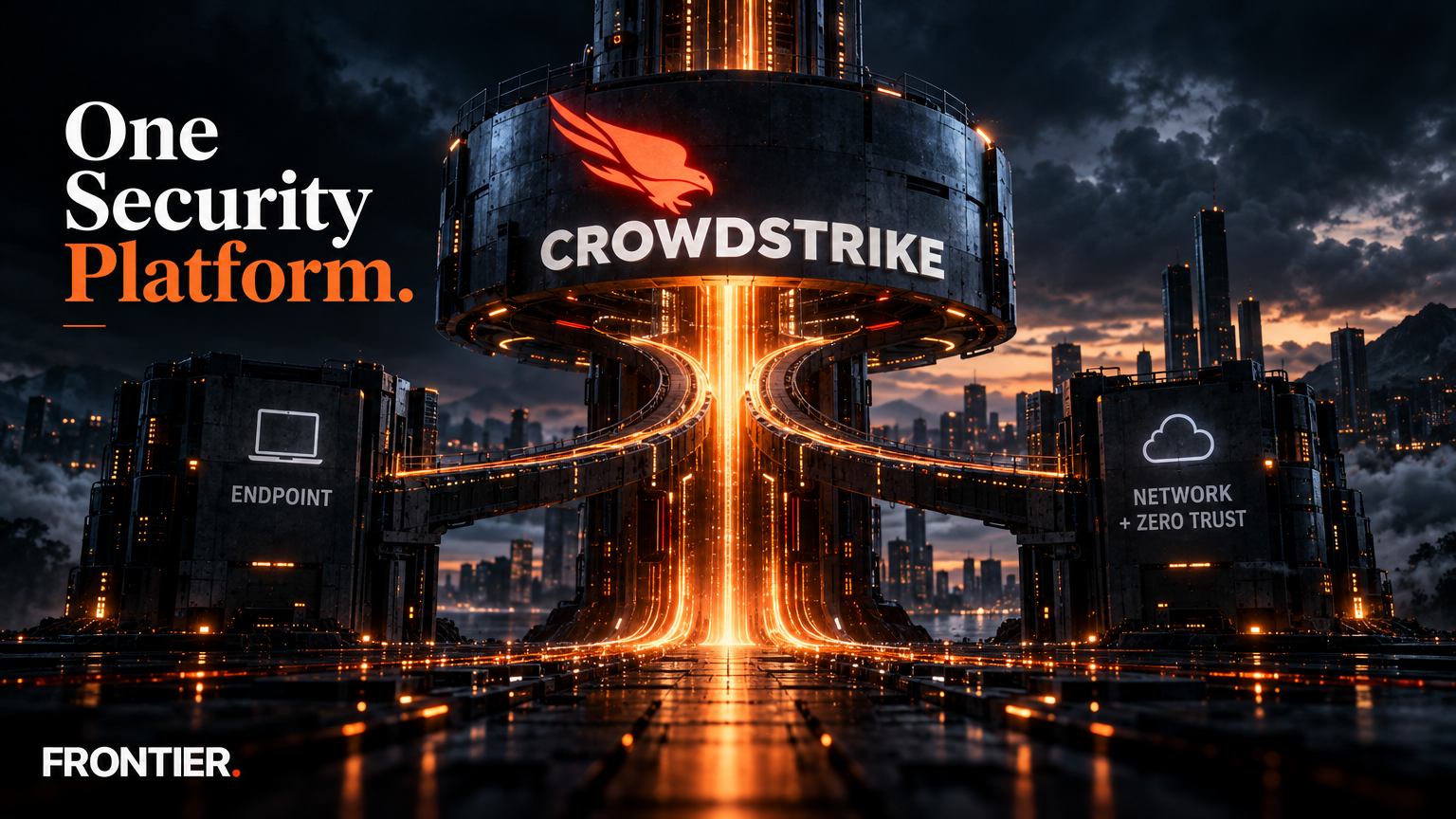
CrowdStrike and Zscaler announced on November 23, 2026, that CrowdStrike had agreed to acquire Zscaler in an all-stock transaction with an announced enterprise value of approximately $43.9 billion. The legally material merger agreement was signed on November 22, according to Zscaler’s Form 8-K.12 The agreement would combine CrowdStrike’s endpoint-centered Falcon platform with Zscaler’s network-security and zero-trust access capabilities, moving controls often bought and operated separately under one corporate owner and, eventually, a more unified platform strategy.
The consideration is stock rather than a $43.9 billion cash expenditure. Zscaler shareholders would receive 1.135 CrowdStrike shares for each Zscaler share, while existing CrowdStrike and Zscaler shareholders are expected to own approximately 84.1% and 15.9% of the combined company, respectively.21 The enterprise-value figure was calculated using CrowdStrike’s November 20 closing share price and therefore should not be treated as a fixed cash purchase price. Associated Press and Reuters also reported the agreement at approximately $43.9 billion.34
The acquisition has not closed. The companies expect completion in the second half of CrowdStrike’s fiscal year 2028, subject to Zscaler shareholder approval, regulatory clearance and other customary conditions.5 Until then, CIOs should treat CrowdStrike and Zscaler as separate suppliers whose future integration, product packaging and operating model remain prospective rather than established.
CrowdStrike says the combination could generate about $1 billion in annualized revenue synergies within 30 months of closing and $500 million in annualized cost synergies within 18 to 24 months. It also says the acquisition would add more than $185 billion to its total addressable market and provide cross-selling access to roughly 8,000 Zscaler customers that do not use CrowdStrike.1 Those are vendor forecasts, not realized results. They nevertheless show the intended commercial model: sell endpoint, identity, network and access controls as a broader platform rather than as independent products.
Reuters characterized the agreement as CrowdStrike’s bet on network security, which captures the strategic expansion better than framing it simply as a larger endpoint-security acquisition.4 The deal’s disclosed terms do not establish technology outages as its cause or rationale. Its direct significance is consolidation across security layers that enterprises have traditionally separated for technical, procurement and resilience reasons.
Why it matters
CIOs now face a more concrete choice about whether endpoint protection and network security should remain separate purchasing decisions. A combined CrowdStrike-Zscaler platform can reduce integration work, produce more consistent policy enforcement and connect telemetry across users, devices, workloads, networks and access sessions. If the companies deliver that integration after closing, security teams may be able to investigate incidents and enforce controls with fewer consoles, data pipelines and vendor handoffs. Those benefits are plausible consequences of integration, but they are not yet proven product outcomes.
The corresponding risk is that consolidation can turn several controls into one commercial and operational dependency. A problem in a shared management plane, identity dependency, policy engine, update channel or administrative process could affect more than one defensive layer. Even when products retain separate technical infrastructure, common ownership can narrow negotiating leverage and make future architectural separation more expensive. CIOs therefore need to distinguish a unified commercial bundle from a genuinely unified architecture—and assess both for concentration risk.
Procurement timing complicates the decision. The expected closing period extends into the second half of CrowdStrike’s fiscal 2028, and the transaction still requires approvals.5 Enterprises with renewals before then cannot assume particular integrations, prices or road maps will materialize. Deferring every decision would also carry a cost: organizations may need to replace legacy remote-access tools, improve zero-trust enforcement or simplify security operations before the deal closes. Near-term contracts should address current product performance while preserving options for the proposed combination.
For customers already using both vendors, the central question is not whether consolidation is inherently good or bad. It is which integrations remove measurable operational work without placing independent recovery paths inside the same failure domain. A shared incident view may be valuable; making endpoint enforcement, network access and administrative recovery dependent on one control plane may not be. Architecture reviews should trace dependencies for authentication, policy distribution, updates, logging, revocation and emergency access rather than relying on the number of products shown in a bundle.
Customers using only one of the vendors face a different tradeoff. CrowdStrike says roughly 8,000 Zscaler customers do not currently use its products, identifying a substantial cross-selling opportunity.1 Those customers should expect stronger incentives to add adjacent controls if the transaction closes. Discounts can improve near-term economics, but a broader commitment may raise migration costs and reduce pricing tension at subsequent renewals. Buyers should calculate the cost of leaving individual components, not merely the initial savings from adopting the suite.
The agreement also changes competitive evaluations already in progress. A point-product comparison that scores endpoint and network controls independently may miss the operational value of connected telemetry. Conversely, a platform evaluation that gives heavy credit for a future integrated road map may reward capabilities that do not yet exist. CIOs should require separate scoring for available functions, contractually committed integrations and aspirational plans. The merger agreement establishes ownership terms; it does not establish when particular technical integrations will ship or how well they will work.2
Frontier take
The strongest interpretation of this deal is that security consolidation has crossed from a tooling discussion into a resilience decision. CrowdStrike is not merely adding another security category. It is seeking to place endpoint, network and zero-trust access within one platform strategy, aligning controls that influence whether users and devices can reach enterprise resources. That can simplify defense, but it also increases the importance of deciding which controls must remain independently recoverable.
CIOs should not preserve vendor sprawl for its own sake. Separate suppliers can create fragmented telemetry, inconsistent policy, duplicated agents and slow incident coordination. Nor should they assume that one supplier automatically creates one dangerous technical dependency. Products under common ownership can retain distinct infrastructure and recovery mechanisms. The relevant test is whether consolidation reduces operational complexity while preserving the organization’s ability to detect, communicate and restore access when a primary security plane fails.
That test should shape architecture and contracts before the acquisition closes. Enterprises can use a combined platform for routine policy and telemetry while retaining independent emergency administration, alternative network paths or exportable security data. They can also negotiate component-level termination rights rather than allowing every control to renew as one indivisible bundle. These measures preserve the advantages of integration without requiring an organization to unwind its entire security architecture if service quality, pricing or strategic direction changes.
The transaction’s financial structure reinforces that need for optionality. Because Zscaler shareholders would receive CrowdStrike shares and become owners of the combined company, the agreement aligns the vendors around a long-term platform expansion rather than a limited product partnership.2 CrowdStrike’s projected revenue and cost synergies further indicate that cross-selling and operating consolidation are core to the transaction’s economic logic.1 Customers should expect commercial integration to move faster than some technical integration because packaging and account coordination are generally distinct from the engineering required to unify policy, telemetry and recovery systems. That timing difference is an analytical inference, not a disclosed implementation schedule.
The right response is selective consolidation: combine controls where shared data and policy produce measurable gains, but preserve independence where a common dependency could obstruct recovery. CIOs that treat the agreement only as an opportunity for bundle discounts may exchange visible license savings for less visible switching and outage risk. Those that reject integration categorically may retain needless complexity. The acquisition makes dependency design—not vendor count—the more useful measure of security resilience.
Three moves for CIOs
-
— Map shared failure domains before accepting a combined security bundle Create a dependency map covering endpoint enforcement, network access, identity, policy distribution, update channels, logging and emergency administration. Test whether security and infrastructure teams can authenticate, communicate, revoke access and restore service if the proposed shared control plane is unavailable. Require architecture reviews to distinguish common ownership from actual common infrastructure.
- Decision trigger: Run the review when either vendor proposes a combined enterprise agreement, when an endpoint or zero-trust renewal falls within 18 months, or when more than one critical control would depend on the same administrative or identity path.
- Why now: The companies have announced a platform-oriented combination, but closing and technical integration remain future events.5 Mapping dependencies now lets CIOs evaluate consolidation on recoverability rather than discounts or road-map promises.
-
— Separate current capability, committed integration and road-map aspiration Score procurement candidates in three columns: functions available and tested today, integrations backed by contractual delivery commitments, and vendor aspirations without enforceable dates. Attach service credits, exit rights or renewal flexibility to integrations that materially affect the business case, and avoid pricing a future unified platform as if it were already operating.
- Decision trigger: Apply this structure whenever a proposal relies on post-acquisition integration to justify a multi-year term, migration expense or retirement of an existing control.
- Why now: The merger agreement establishes transaction terms, not a product delivery schedule.2 The long path to the expected fiscal 2028 closing creates room for road maps, approval timing and packaging to change.
-
— Negotiate component-level portability and termination rights Require usable exports for telemetry, policies and incident records; document interfaces needed by alternative tools; and preserve the right to terminate or replace individual endpoint, network or access components without repricing the entire agreement. Maintain at least one tested recovery path that does not depend on the consolidated platform’s primary administrative plane.
- Decision trigger: Make these terms mandatory when a bundled proposal produces material savings only through an enterprise-wide commitment, restricts data export, or ties several security controls to one renewal date.
- Why now: CrowdStrike’s stated synergy and cross-selling targets indicate that broader account penetration is central to the deal’s economics.1 Buyers should secure portability before commercial integration reduces their leverage or makes individual controls harder to separate.
Sources
- CrowdStrike and Zscaler joint acquisition announcement 1
- Zscaler publication of the joint acquisition announcement 5
- Zscaler Form 8-K disclosing the definitive merger agreement 2
- CrowdStrike Form 8-K filing index for the definitive agreement 6
- Associated Press report on the CrowdStrike-Zscaler agreement 3
- Reuters reporting syndicated by Investing.com 4
- Axios report on the acquisition agreement 7
[^crowdstrike-release][^zscaler-sec-8k][^ap-report][^reuters-report][^zscaler-release][^crowdstrike-sec-8k-index][^axios-report]